
The 4,100-acre Memphis Regional Megasite, located in Haywood County, could soon be invigorated with another dose of state aid.
On June 8, Tenn. Gov. Bill Lee announced a plan to complete major infrastructure at the site, along with initiatives to address workforce and quality-of-life issues in the region.
“The Memphis Regional Megasite offers tremendous opportunity for West Tennessee, and I am committed to building out infrastructure and supporting area workforce as we find the right company for this space,” Lee said in a press release. “I have directed the Department of Economic and Community Development to aggressively market the Megasite and offer enhanced incentives to companies demonstrating a long-term desire to call Haywood County home.”
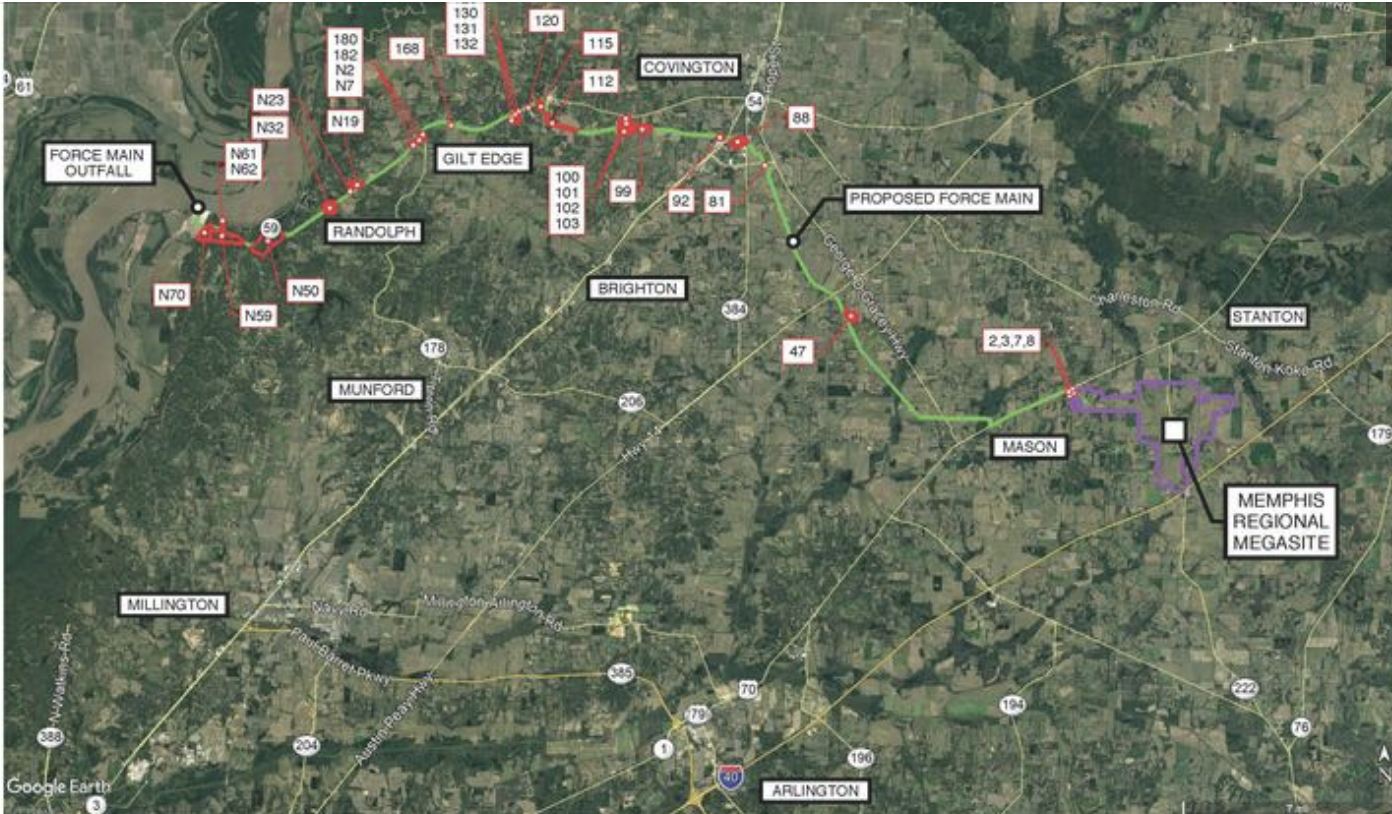
 In July, his administration will present plans to the State Building Commission that move forward with construction of a wastewater discharge pipeline, a key aspect of making the site a viable landing spot, and one of the more complex aspects of wastewater buildout.
The proposed investments are expected to total more than $52 million, and would address both wastewater and water infrastructure. They come after the release of an independent study — commissioned by the Lee Administration and conducted by Gresham Smith — which sought to determine the site’s viability and assess its infrastructure needs, area workforce, and quality of life.
Speaking of workforce and life quality, the state wants to address these issues, as well. The state would invest $80 million in the Tennessee Colleges of Applied Technology (TCAT) to clear a waiting list of more than 11,000 students, who are ready to join the workforce, according to the release. And, over the next year, it’s committed to spending $100 million to improve broadband connectivity in rural areas.
This is far from the first time the state has looked to pour funds into the Megasite. Since its original site certification in 2006, the state has appropriated $174 million in funds to support it, according to the study. Of that funding, about $90 million has been spent on the water and wastewater infrastructure.
In April, Tennessee Department of Economic and Community Development (TNECD) commissioner Bob Rolfe bluntly discussed weaknesses of the site in a presentation to the State Funding Board.
While he noted a variety of issues — including a lack of “livability” in Haywood County and the perceived lack of a trained workforce — the primary problem was sewage, which wasn’t a problem for most of the alternative sites prospective tenants had to choose from.
Despite these challenges, Rolfe said TNECD has shown the site to dozens of companies and has drawn interest from quite a few in the past.
John Klyce Reporter, Memphis Business Journal | June 8, 2021